
A purity claim on a Selank research batch means very little until you can see the proof behind it. The proof comes from independent lab testing, usually run by high-performance liquid chromatography (HPLC, a method that separates a sample into its parts and shows how much of it is the compound you wanted) and mass spectrometry (which confirms the molecule is the right one by measuring its weight). Together, these two tests tell you whether a batch is what the label says and how clean it is.
Anyone browsing selank vials here or from any other supplier will run into the same paperwork: a certificate of analysis, a batch number, a purity percentage. Those documents are only useful if you know how to read them and who produced them. A high number printed on a label isn’t the same as a result you can verify.
Here in Ontario, plenty of curious readers want a plain explanation before they trust any source. That’s fair. This article walks through how testing works, what the numbers and charts actually say, and which warning signs should make you pause. We’ll also cover your rights and responsibilities as a buyer, and where to turn for official help. No hype, no medical claims, just a clear way to judge what you’re looking at.
What Purity Testing for Selank Research Batches Actually Is
Reading a Certificate of Analysis Without a Chemistry Degree

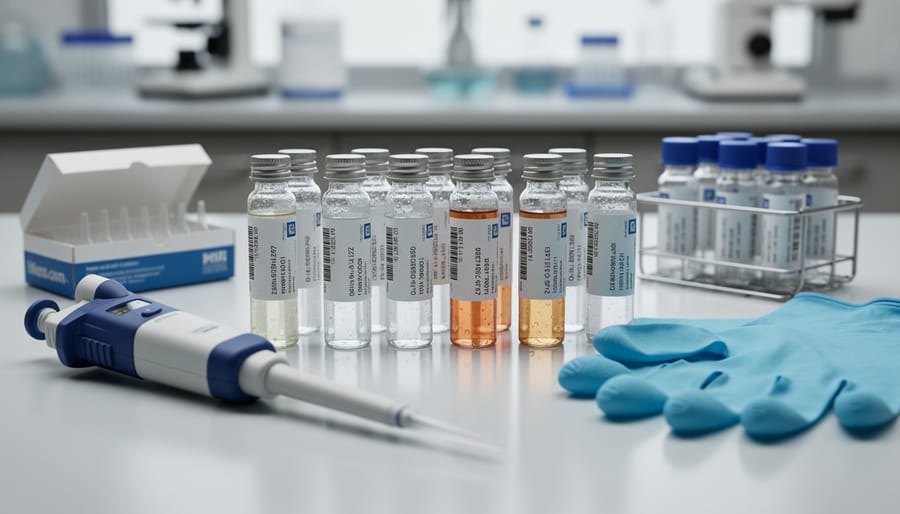
Think of a certificate of analysis (often shortened to COA) like a home inspection report. A good one doesn’t just say “the house is fine.” It tells you who looked, when they looked, what they checked, and what they found. A COA works the same way for a vial of Selank, and you don’t need a chemistry degree to read it.
Start with the batch number, which ties the document to one specific production run. Next comes the test date, followed by the method (usually HPLC, the technique that separates and measures what’s in a sample). Then you’ll see the result, normally a purity percentage, and finally the name of the lab that did the work.
Here’s a quick guide to what each part should show and what should make you pause:
| Certificate section | What it should show | Red flag to watch for |
|---|---|---|
| Batch number | A unique ID that matches the label on your vial | No number, or one that doesn’t match the product |
| Test date | A specific date close to the production run | A missing date, or the same certificate reused across batches |
| Method | The named technique, such as HPLC or mass spectrometry | A purity number with no method listed |
| Result | A precise percentage and an identity confirmation | A suspiciously round figure with no supporting data |
| Lab name | A named, independent lab with contact details | No lab named, or the seller grading its own work |
None of these checks proves a product is safe for anyone to take. They simply tell you whether the paperwork holds together. If a certificate leaves out several of these pieces, that’s worth noticing before you trust anything else the seller says.
Who Should Be Testing and What a Trustworthy Batch Looks Like
Quality in a research peptide batch isn’t one person’s job. It’s shared, and knowing who holds which piece helps you judge whether a batch deserves your trust.
Suppliers go first. They’re expected to make the product properly, label it honestly, and keep records for every batch they release. But a supplier testing its own product is a bit like a restaurant inspecting its own kitchen. It can be done well, yet it isn’t the same as an outside check. That’s why independent third-party labs matter. These labs have no stake in the sale, so their results carry more weight than a supplier’s own numbers.
Then there are the people who actually handle the material. In Canada, work with research peptides belongs in a proper lab setting, run by trained researchers and institutions that follow lab safety and ethics procedures. A curious reader at home isn’t the intended audience for a “research use only” vial, and that label doesn’t make a product cleared for people to take.
So what does a credible batch look like? Think of it like a home inspection report: it should be specific to the house in question, not a generic brochure. Here’s a simple checklist:
- Independent lab results tied to a specific batch number, not a general product page.
- A named testing method, such as HPLC or mass spectrometry, rather than a bare percentage.
- A recent test date that fits the batch’s production timeline.
- Transparent contact details for both the supplier and the testing lab.
- Consistent labelling, where the batch number on the vial matches the paperwork exactly.
That last point is about traceability, and it’s worth lingering on. If you can follow a vial back to a batch, a test, and a lab you can actually contact, the chain holds together. If any link is missing or doesn’t match, that’s your cue to pause and ask questions before going further.
Warning Signs: When the Paperwork Doesn’t Add Up
Picture a neighbour who has been scrolling through an online listing and sees a Selank vial with a tidy certificate attached. It looks official. But a good paperwork check is a bit like reading a used-car history report: the gaps tell you as much as the details do.
One red flag is a certificate with no batch number, or the very same certificate showing up on listings for different batches. If the document can’t be tied to the actual vial, it proves very little. Another is a purity claim that’s a suspiciously round “99%” with no test method, lab name, or date beside it. A real result tells you how it was measured and by whom.
Watch for vague sourcing too, such as “made in a certified facility” with no named lab you could look up. And be wary of any listing that swaps lab talk for big health promises about mood, stress, or focus. Real testing paperwork describes what’s in the vial, not what it will do for you.
It’s worth remembering how easily a confident-sounding label can win trust. Plenty of us have seen this with other products sold on big claims, and the conversation around the vaping health impact shows why asking questions early matters. If something feels off, trust that feeling, pause, and take your questions to a pharmacist or doctor.
Your Rights and Obligations as a Buyer, Researcher, or Consumer in Ontario
Think of it as a two-way street. You can expect honest information from the people selling you something, and you’re expected to follow the rules that come with handling it.
On the rights side, anyone buying a product in Ontario can reasonably expect accurate labelling and truthful descriptions. A vial that claims a particular purity should come with documentation that backs it up, and a seller shouldn’t dodge simple questions about where a batch came from or who tested it. Ontario’s general consumer protection rules exist to discourage misleading claims, and the province’s consumer protection office is the place to check what currently applies to your situation.
On the obligations side, things get stricter. Bringing products across the border, receiving them by mail, or storing them are all covered by Canadian rules, and “research use only” does not exempt anyone from those. Buyers are responsible for knowing what they can legally import and handle, and the official Government of Canada and Health Canada websites are the right places to confirm today’s requirements rather than relying on a seller’s word.
Institutions carry extra weight. Universities, hospitals, and labs are expected to follow their own lab safety procedures and research ethics approval processes before working with materials like this. Our look at health system readiness shows how much Ontario’s health and research bodies depend on following established procedures, and the same spirit applies here. For broader context on how the province communicates about health matters, Ontario health updates can be a useful reference point.
None of this is legal advice. It’s a starting point for asking better questions, and the official sources are where you’ll find the current, authoritative answers.
Where to Get Help: Official Resources and Local Support
If something about a Selank product, a certificate, or your own health feels off, you don’t have to sort it out alone. Ontario has plenty of trusted places to turn, and each one plays a different role. Here’s a quick guide to who can help with what.
| Who to Contact | What They Can Help With | When to Reach Out |
|---|---|---|
| Health Canada | Questions about how products are regulated, and reporting concerns about a product | When a product is sold with health claims or you suspect it isn’t following Canadian rules |
| Ontario consumer protection channels | Misleading labelling, unfair business practices, and purchase disputes | When you feel a seller misled you or won’t stand behind what they sold |
| Local pharmacist or family doctor | Health questions and what a peptide product might mean for you personally | Before using anything, or if you feel unwell afterward |
| Poison control and public health units | Safety concerns, possible reactions, and community health guidance | When something seems unsafe or someone has had a bad reaction |
| University or hospital research ethics office | Rules and approvals for handling research materials in a lab | When you work at an institution and need guidance on procedures |
A few notes on using these resources well. Health Canada’s website is the best starting point for anything about product regulation, and it’s also where you’d find the current process for raising a concern. Ontario’s government website lists the consumer protection options, which is handy if a seller’s story and their paperwork don’t match.
For anything touching your health, a pharmacist is often the easiest first conversation. They’re approachable and used to answering questions without an appointment. Your family doctor can then take a closer look if needed. If you ever feel something is a safety emergency, poison control and your local public health unit are there for exactly that.
Contact details change, so always check the official websites for the current information rather than relying on an old number or a friend’s memory.

Common Questions About Selank Purity and Testing
Here are plain answers to the questions neighbours tend to ask most.
What purity percentage is considered good?
There’s no single magic number, and a high figure on its own doesn’t tell you much. What matters is that the percentage comes with a named method, such as HPLC, and a batch number you can trace back to the vial in your hands.
Is a certificate of analysis enough proof?
Not by itself. A certificate is only as trustworthy as the lab that produced it, so look for independent testing, a clear test date, and a batch number that matches the product.
Are research-grade peptides safe to take?
No. “Research use only” means the product is meant for the lab, not for people, and passing a purity test doesn’t make it cleared for human use in Canada.
What does third-party testing mean?
It means a lab with no financial stake in the sale did the testing, rather than the seller grading its own homework. That independence is what gives the results weight.
Who should I ask if a product seems questionable?
Start with a pharmacist or family doctor for health questions, and Health Canada for concerns about how a product is sold or labelled. Ontario’s consumer protection channels can help if you feel misled.
If you’re feeling tempted by a product because you hope it’ll help with stress or rest, it’s worth pausing. Plenty of everyday habits support your sleep and wellness without any guesswork about what’s in a vial.
When in doubt, ask a professional before you buy, and trust your instincts if the paperwork feels thin. A good question costs nothing, and a pharmacist is usually happy to talk it through with you.
Knowing how purity and testing work puts you in a much stronger position. You don’t need a chemistry background to ask whether a certificate names its method, whether it matches the batch in front of you, or whether an independent lab did the work. Those few questions can help you spot a red flag before it becomes a problem.
It also helps to remember what testing can’t do. A clean certificate says something about what’s in a vial. It says nothing about whether a product is safe or suitable for any person, and “research use only” is not a health endorsement.
For anything touching your health, start with a pharmacist or family doctor. For questions about products, labelling, or rules, the official Health Canada and Ontario consumer protection websites are the right next stop.
If this was useful, pass it along. A quick chat with a neighbour, a friend, or a family member who’s been seeing these products online might be exactly what helps someone ask the right questions.